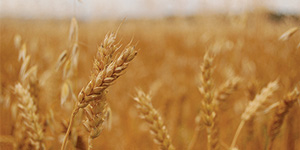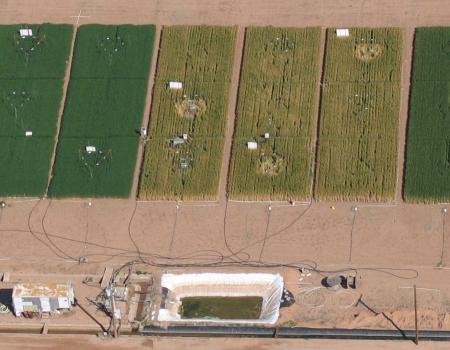
The timing of the last irrigation for wheat and barley is always a difficult decision. Applying an unnecessary irrigation at the end of the season wastes water and can cause lodging. Conversely, water stress at the end of the season may reduce kernel weight, test weight, and yield. On a sandy loam soil, the last irrigation is needed at soft dough. About 3 to 4 inches of water is needed to carry the crop from soft dough to maturity. The average sandy loam soil holds about this amount of plant available water in the active rooting zone. On sandier soils, the last irrigation may be needed between soft dough and hard dough, and on heavier soils, the last irrigation may be applied before soft dough. Obviously, the timing of last irrigation depends on soil type, the irrigation system, the variety, the growth stage of the crop, expected weather conditions, and other factors. Nevertheless, no irrigation water is needed once the heads have completely turned color from green to tan since the crop is mature at this point and yields have been determined. Do not confuse the gradual color change of the crop between flowering and hard dough with the tan color of the head that occurs... read more
Featured Story
Extension Publications
Current Crop Advisories
-
The Small Grains Advisory provides bi-weekly estimates of durum and barley growth stage for two planting dates at 12 AZMET locations.
Crop Calculators
The Crop Growth Stage and Water Use Calculator is an interactive online tool that provides estimates of crop growth stage, water use, and irrigation dates of wheat and barley using current or long-term average weather data from AZMET weather stations for a planting date specified by the user. Pictures and descriptions of the various growth stages are also provided.